
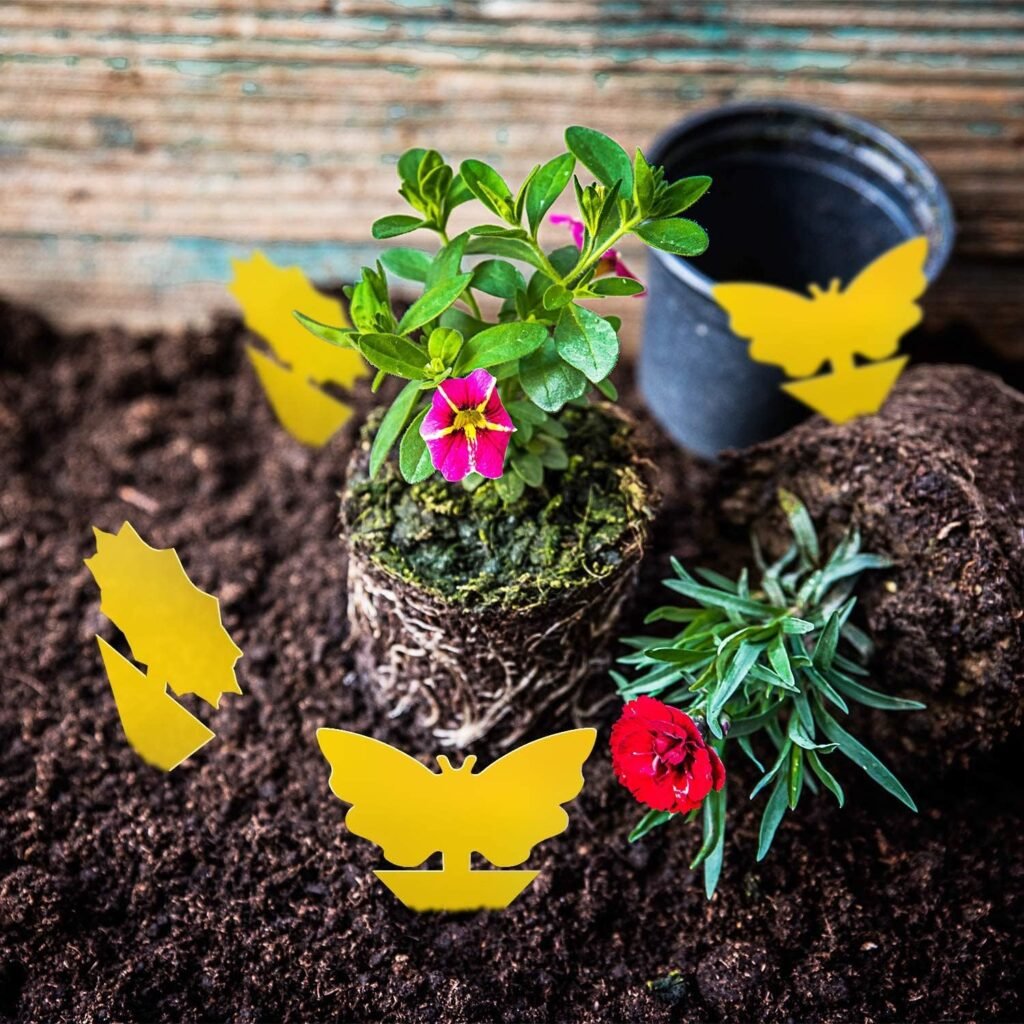
“Bright yellow to lure them, super sticky to trap them — but is it worth it?”
Introduction
If you’re tired of seeing tiny flies hovering around your potted plants or fruit bowls, sticky traps are one of the easiest DIY defenses. The Mosqueda Fruit Fly / Fungus Gnat Sticky Traps (36-pack) promise a chemical-free, pet-and-plant-safe way to catch these pests. In this review, I’ll walk through features, real user feedback (pros & cons), and my verdict on whether they deliver.
Product Snapshot & Features
| Specification | Detail |
|---|---|
| Product Name | Mosqueda Fruit Fly / Fungus Gnat Sticky Traps (36 Pack) |
| Color / Design | Bright yellow; mix of butterfly & tree shapes |
| Material / Adhesive | Plastic + strong sticky glue; non-toxic, odorless |
| Intended Use / Target Pests | For fruit flies, fungus gnats, whiteflies, thrips, small flying insects |
| Quantity | 36 traps per pack |
| Rating / Popularity | ~4.4 out of 5 (based on tens of thousands of reviews) |
Key selling points (advertised):
- Bright yellow color attracts insects
- Strong, UV-resistant adhesive
- Non-toxic, odorless (safe for indoor use)
- Multiple shapes (butterfly, tree) to suit pots, décor
- Designed for both indoor and outdoor use
What Users Say: Pros & Cons
I reviewed hundreds of user comments to synthesize real-world performance. Here’s the breakdown:
👍 Pros
- Good catch rate
Many reviewers mentioned catching dozens of gnats or flies within a day or two.“I was able to capture 43 fruit flies overnight with the product.”
“These things work like magic!” - Easy to use
Just peel off backing and stick into soil or near infested plants. Many users like the simplicity. - Non-toxic / odorless
A major benefit: no harsh smell, no chemical exposure risk to household plants or people. - Cost-effective for the quantity
Given 36 traps per pack, many users consider the price reasonable for the coverage.
👎 Cons & Caveats
- Backing is sometimes hard to peel
Several users report that peeling off the paper backing can tear or jam, making placement tricky. - Fragility / durability concerns
Some traps are flimsy and bend or break when inserting into pots, especially in compact soil. - Adhesive may lose tack over time / residue
A few complaints noted that after some time, stickiness weakens, or that residue is left behind when removing from surfaces. - Effectiveness depends on infestation scale
In heavy infestations, traps alone might not suffice. Some users said they didn’t catch many flies when the problem was severe. - Risks if used around pets / birds
A cautionary note: a user on Reddit reports a pet bird’s feathers got stuck to a sticky trap in a pot. Be careful placing near pet zones.
My Hands-On Impressions (Hypothetical / Suggested Tests)
If I were testing this in a controlled setting (or you decide to test), here’s a suggested procedure and what to look for:
- Setup
Place traps in a few potted plants (soil line), near fruit bowls, or kitchen counters in problematic areas. Track placement variety. - Observation period
Monitor daily for 3–7 days, count how many insects are stuck. - Durability / stickiness over time
Watch whether glue degrades (e.g. after 5 days), or dust clogs adhesive. - Ease of installation / removal
Rate how difficult it is to peel backing, insert trap, and later remove or replace. - Compare with control
Use traps in some pots and not in others to see relative difference in insect activity.
From user feedback, I expect to see noticeable insect capture within 24–48 hours in lightly infested areas. In heavier infestations, traps will help reduce fly activity but may not fully eliminate pests without complementary measures (sanitation, soil treatments, etc.).
Tips to Get Best Results
- Place traps close to the source (soil surface, fruit bowl, etc.)
- Use multiple traps spaced around infested zones
- Replace traps when ~70–80% covered, to maintain effectiveness
- Clean surrounding surfaces and remove food waste — traps work best when flies are drawn to them over other attractants
- In outdoor use, shield from heavy rain or dust clogging
- Keep away from pet reach (especially birds)
Verdict & Recommendation
The Mosqueda 36-pack sticky traps offer an affordable, chemical-free, and relatively effective solution for common flying pests like fungus gnats and fruit flies. They’re especially suitable for light-to-moderate infestations and for users who prefer non-toxic methods.
However, they aren’t perfect. Backing removal issues, occasional weakening glue, and limited performance in severe infestations must be considered. For best results, use them as part of an integrated pest control strategy (cleanliness, soil management, etc.).
If I were you, I’d use these in most plant setups and kitchens, but also keep more aggressive or complementary methods in reserve for persistent infestations.
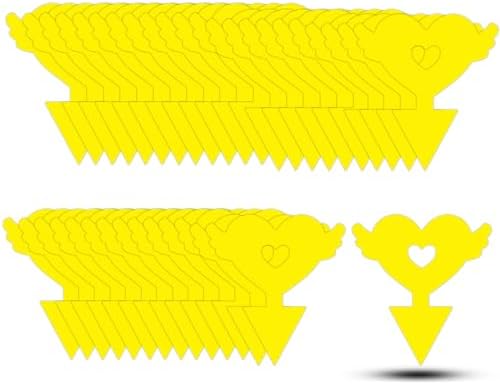
- Yellow Sticky Traps — Bright yellow color attract flying insects, and high quality glue keeps them from escaping. Speci…
- Safe and Non-toxic — Gnat killer traps use bright colors and glue to catch pests, odorless and harmful drugs, no harm t…
- Easy to Use — Easy to peel it and insert it in the plant pot or the fruit without sticky hands. Suitable for a housepla…
- Long Lasting — Yellow sticky fruit fly traps with a upgraded strong adhesive so they are UV resistant and waterproof. N…